Office Cleaning Checklist for Small Businesses
Published August 29, 2026 · Updated August 29, 2026
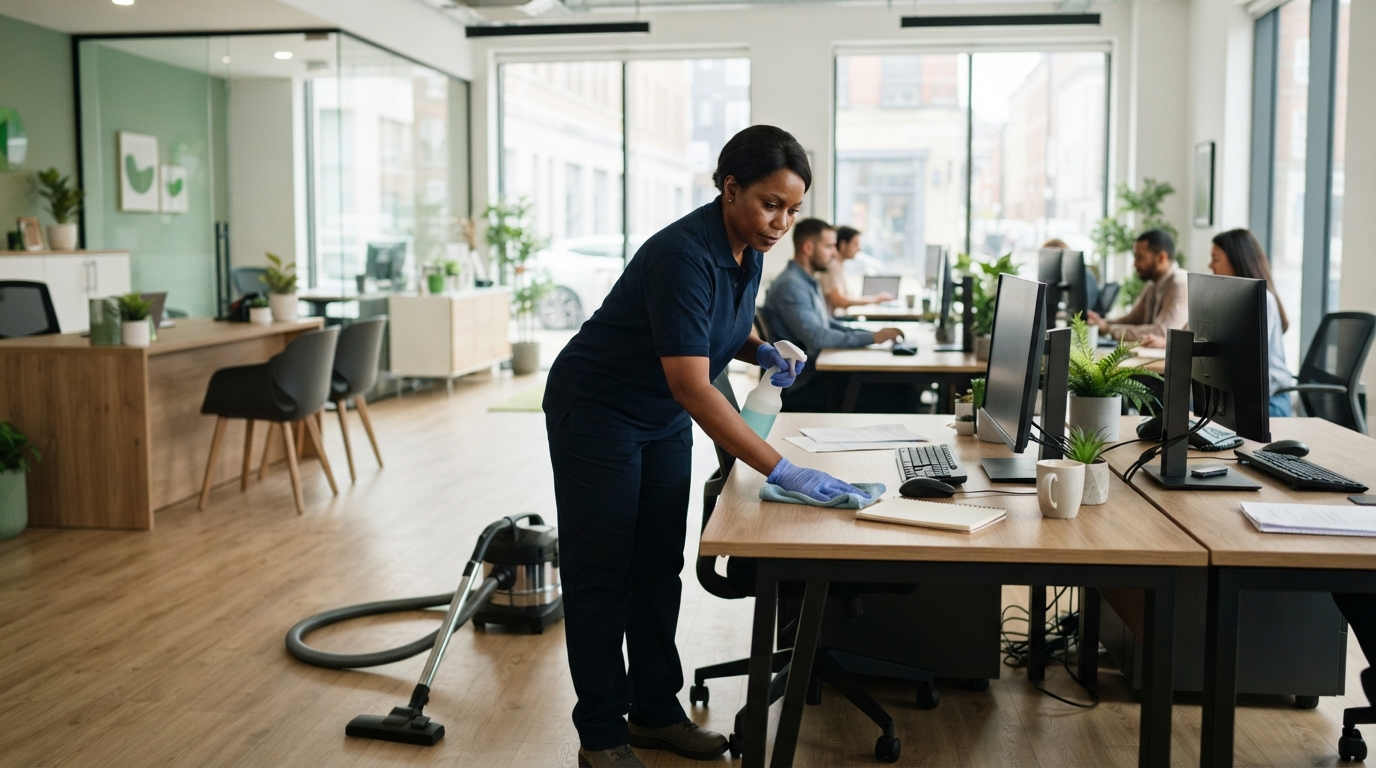
A small office cleaning checklist should answer three questions: what gets cleaned, how often it gets cleaned, and who is responsible for each task.
Without that structure, office cleaning becomes reactive. Trash gets noticed only when bins are full, restroom supplies become a last-minute issue, and high-use areas receive attention only after they look neglected.
A written checklist creates a repeatable standard for reception areas, workspaces, restrooms, break rooms, floors, trash, and common areas. The exact frequency should match the number of people using the space, customer traffic, operating hours, floor types, and site rules.
Start with the type of office
Not every commercial property has the same cleaning needs.
A standard professional office may include:
- Reception area
- Private offices
- Shared desks or workstations
- Conference room
- Break room
- Restrooms
- Hallways
- Entryway
- Storage or copy area
SoPURE's current Office Cleaning service is for standard offices and small-business spaces within the approved non-regulated scope. Clinics, medical facilities, restaurants, industrial settings, and other regulated facilities are outside the launch scope.
That distinction matters. Specialized environments may require different training, products, documentation, or regulatory controls.
Reception and customer-facing areas
The reception area is often the first indoor space employees, customers, vendors, and visitors see.
Routine tasks may include:
- Remove visible trash
- Wipe approved counters and hard surfaces
- Dust accessible furniture surfaces
- Address fingerprints on approved glass surfaces
- Vacuum or sweep floors
- Mop approved hard flooring
- Reset chairs or light movable items when practical
- Check the entry for tracked debris
The checklist should identify which surfaces are cleaned and which items should not be moved.
Workstations and private offices
Desk areas require extra care around personal and business information.
A cleaning plan can include:
- Empty trash according to site rules
- Dust accessible open surfaces
- Vacuum flooring
- Mop approved hard floors
- Clean accessible furniture surfaces included in scope
- Address visible debris in common walking areas
Do not assume cleaners should move paperwork, unplug electronics, rearrange desks, or handle confidential materials.
SoPURE's property-respect rules make privacy part of the work. Field staff should not share customer addresses, access codes, private conversations, or customer information outside the approved company process.
For an office, the written site scope should clarify how desks with paperwork or electronics are handled.
Conference rooms and shared spaces
Shared meeting rooms can collect fingerprints, cups, crumbs, and floor debris quickly.
Common checklist items may include:
- Wipe approved table surfaces
- Reset chairs when practical
- Empty trash
- Clean accessible touch surfaces within the approved method
- Vacuum carpet
- Clean hard flooring
- Address visible glass marks when included
Frequency depends on how often the room is used. A conference room used all day may need a different schedule from one used a few times per month.
Break room checklist
Break rooms combine food, trash, sinks, appliances, and high traffic.
A routine checklist may include:
- Wipe counters
- Clean sink and faucet
- Wipe appliance exteriors
- Address table surfaces
- Empty trash and recycling according to site rules
- Vacuum or sweep floor debris
- Mop approved hard flooring
Interior refrigerator, microwave, or cabinet work should be defined separately if the office wants those tasks included.
A company should also decide who removes old employee food. That is an operating policy, not something the cleaner should guess.
Restroom checklist
Standard office restroom cleaning often includes:
- Toilets or urinals within scope
- Sink and counter
- Mirror
- Faucet and fixtures
- Trash
- Floor care
- Visible partition or surface spots when included
Supply restocking should be clarified in the service plan. If the cleaning company is expected to monitor soap, paper products, liners, or other supplies, define who provides them and where backups are stored.
SoPURE field notes for office and small-business sites include supply needs and restroom or common-area concerns so the office can follow up.
Floors and entryways
Floor frequency depends heavily on traffic and season.
For Minnesota offices, winter brings tracked snow, grit, moisture, and deicing salt into entries. The Minnesota Pollution Control Agency notes that tracked salt can damage entrance carpets and flooring over time.
A practical office plan can include:
- Entry mats
- Frequent dry debris removal
- Vacuuming carpeted traffic lanes
- Mopping approved hard floors
- Attention to corners and edges at scheduled intervals
- Extra entryway review during winter weather
Cleaning products and methods should match the floor material.
Trash and recycling
Trash is simple only when the rules are clear.
Define:
- Which bins are emptied
- Where waste is taken
- How recycling is separated
- Whether desk-side bins are included
- How food waste is handled
- Whether liners are replaced
- Who provides liners
Sensitive or regulated waste should never be treated as routine office trash without an approved process.
Add weekly or rotating detail work
Not every task needs to happen at every visit.
Depending on the office, rotating items may include:
- Detailed baseboards
- Interior glass
- Door frames
- Less-used rooms
- High dusting within approved reach
- Detailed break-room surfaces
- Cabinet fronts
- Floor-edge detail
Separate recurring tasks from rotating details so the checklist stays realistic.
Access, lockup, and site rules matter
Office cleaning may happen before opening, during business hours, or after employees leave.
Before service begins, clarify:
- Entry method
- Alarm procedure
- Keys or access cards
- Restricted rooms
- Security rules
- Parking
- Waste location
- Lights
- Final lockup responsibility
- Site contact
SoPURE's office process is built around hours, access rules, high-use areas, task frequency, and written site scope. The field team records access and lockup status along with site concerns that need office follow-up.
How often should a small office be cleaned?
There is no universal schedule.
A small professional office with limited visitor traffic may need a different frequency from a busy customer-facing office with daily restroom and break-room use.
Review:
- Employee count
- Visitor traffic
- Restroom use
- Food areas
- Floor types
- Winter entryway conditions
- Trash volume
- Business hours
- Presentation standards
Then build the service frequency around the actual space.
Frequently asked questions
Does office cleaning include every desk surface?
Not automatically. Desk access, paperwork, electronics, and confidential materials should be addressed in the written scope.
Does SoPURE clean medical offices or restaurants?
Those regulated settings are outside SoPURE's current launch scope. The active office service focuses on standard offices and small-business spaces.
Can office cleaning happen after hours?
It can when the service agreement, access plan, staffing, and site rules support it. Confirm the schedule before service.
How is office cleaning priced?
SoPURE reviews office work based on the space, required production hours, scope, access, and service needs rather than publishing one fixed office rate.
Need a cleaning plan for your small office?
SoPURE Cleaning Services provides standard Office Cleaning in Anoka and approved nearby communities. Review our cleaning services, Contact SoPURE, or request an estimate and share the office size, hours, access rules, restrooms, floors, trash needs, common areas, and preferred service schedule.
Related Service: Office Cleaning
Standard office and small-business cleaning within approved non-regulated service scope.
Ready to Request a Cleaning Estimate?
Tell SoPURE about your property and cleaning needs. A team member will follow up to discuss the service and next steps. Online estimate requests are available 24/7.