
House Cleaning Tips for Busy Families: A Realistic Weekly Routine
Published August 29, 2026 · Updated August 29, 2026
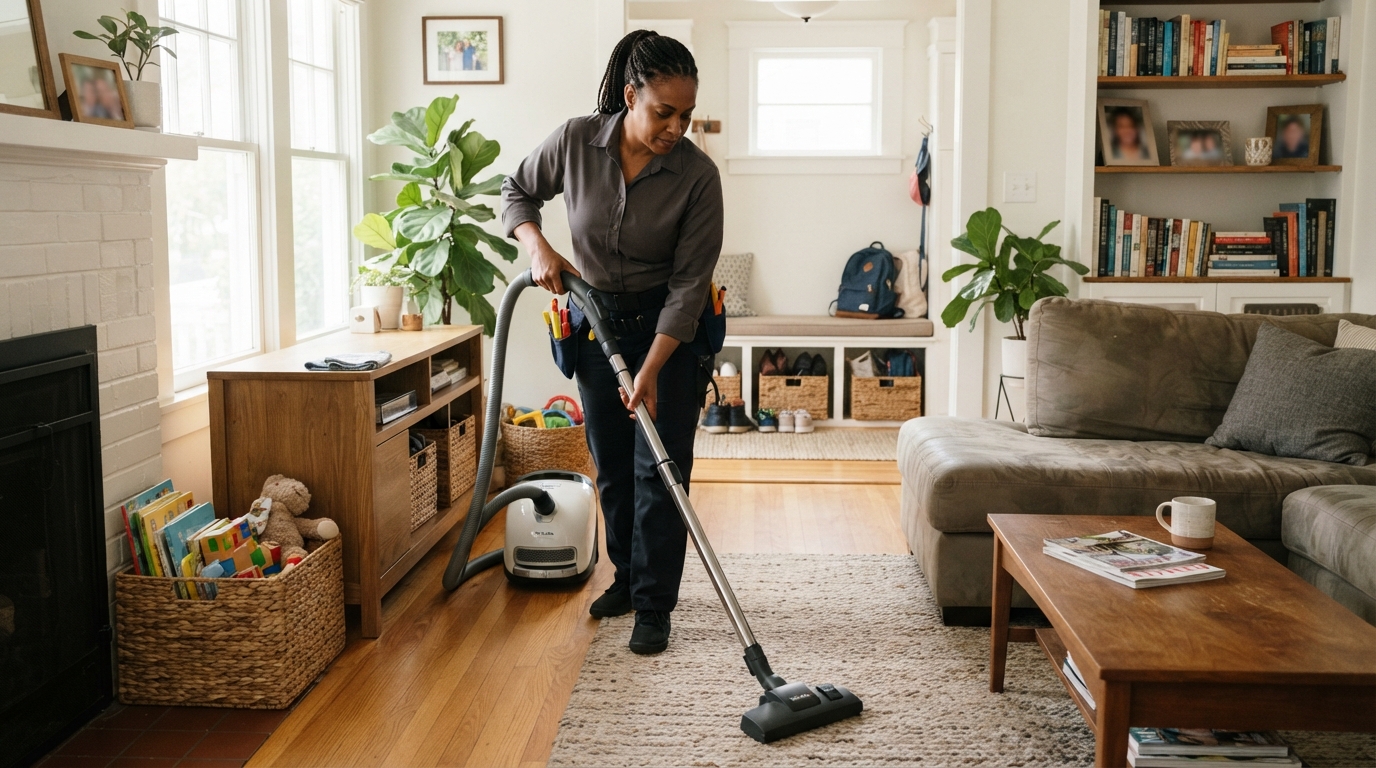
Busy families rarely need a more complicated cleaning plan. They need a smaller plan that can survive workdays, school schedules, appointments, meals, pets, laundry, and the unexpected parts of family life.
A practical routine has three layers: short daily resets, a few weekly focus tasks, and rotating detail work that does not need attention every seven days. If professional recurring cleaning is part of the household plan, use it to take larger maintenance tasks off the family calendar instead of duplicating the same work.
The goal is a home that stays manageable, not a perfect checklist completed every day.
Layer 1: Keep a few daily anchors
Daily tasks should be short and connected to things the household already does.
Good daily anchors include:
- Handle dishes and food-related surfaces after meals
- Wipe visible spills when they happen
- Put loose trash in the appropriate bin
- Return shoes, bags, and coats to a defined place
- Move one step of laundry forward when needed
- Do a five- or ten-minute pickup in the busiest room
The point is not to clean the whole house every evening. It is to prevent small messes from becoming a much larger weekend project.
A family that consistently resets the kitchen and main living area may find the entire home feels easier to manage, even when bedrooms or lower-priority spaces are not perfect.
Layer 2: Give each week a few focus areas
Instead of assigning a major cleaning task to every day, choose a short list of weekly priorities.
For many homes, those are:
- Bathrooms
- Floors
- Dusting
- Kitchen detail
- Bedrooms and bedding
- Entryway
You can spread these tasks across the week or group them into one or two blocks of time. The right schedule is the one the household can repeat.
For example:
Monday: bedroom reset
Pick up clothes, clear nightstands, change linens that need it, and make floors accessible.
Tuesday: bathroom maintenance
Clean the sink, vanity, mirror, toilet, and the routine shower or tub surfaces that need attention.
Wednesday: kitchen detail
Focus on the stovetop, sink, appliance exteriors, cabinet-front spots, and any food residue that daily wiping missed.
Thursday: floors
Vacuum carpeted areas and clean hard floors with the method appropriate for the material.
Friday: entry and living area
Reset the main entry, clear the living room, and catch anything that slipped during the week.
The exact days do not matter. The pattern does.
Layer 3: Rotate the detail work
Some cleaning tasks matter, but they do not belong on every weekly list.
Rotate items such as:
- Detailed baseboards
- Interior appliance cleaning
- Cabinet interiors
- Detailed blinds
- Closet resets
- Interior windows
- Less-used rooms
- Seasonal entryway work
Trying to put every detail task into every week creates a schedule most households will abandon.
A rotating approach lets you keep maintenance moving without turning one Saturday into an all-day cleaning project.
Share the household reset
Cleaning is easier when the whole routine does not depend on one person noticing everything.
Age-appropriate household tasks can include:
- Putting toys away
- Returning shoes to the entry
- Carrying clothes to a hamper
- Clearing dishes
- Emptying small trash bins
- Straightening cushions
- Putting books or electronics back in place
Keep instructions simple and specific. “Clean your room” can mean ten different things. “Clothes in hamper, trash out, books on shelf, floor clear” is easier to understand.
The same idea works for adults. Assign ownership instead of waiting for someone to notice that a task needs attention.
Protect the high-traffic areas first
When time is limited, prioritize the parts of the house that affect daily function.
For many families, that means:
- Kitchen
- Main bathroom
- Entryway
- Living room
- Main floor path
If those spaces are under control, the home can feel more workable even when lower-use areas are waiting for their turn.
This is especially useful during high-pressure weeks when the full routine is unrealistic.
Minnesota homes need an entryway plan
Winter adds a special problem for Minnesota families: snow, grit, moisture, and deicing salt come through the door on boots, paws, strollers, and bags.
MnDOT uses salt and other deicing materials during winter road maintenance, and the Minnesota Pollution Control Agency notes that tracked salt can damage entrance carpets and flooring over time.
A practical winter entry routine can include:
- A durable exterior mat
- An absorbent interior mat
- A clear shoe-drop area
- Quick dry pickup of visible grit
- A towel or mop for tracked moisture
- Regular vacuuming around the entry before wet floor care
Waiting until the entire first floor looks dirty creates more work. A two-minute entry reset can keep debris from spreading farther into the home.
Use professional cleaning to remove the larger maintenance block
If the family routine still requires more cleaning time than the household wants to give, professional service can take a defined portion of the maintenance off the calendar.
SoPURE's Recurring House Cleaning uses a scheduled plan and defined checklist. Standard House Cleaning focuses on routine cleaning of living areas, kitchens, bathrooms, and common spaces based on the approved scope.
A recurring cleaning service does not remove every household task. Dishes, laundry, daily clutter, spills, and personal organization still happen between visits. The value is that larger routine cleaning tasks can move to a scheduled service instead of competing with family time each week.
Know when the home needs a reset first
If routine cleaning has fallen behind for a long period, jumping directly into maintenance may not match the current condition.
SoPURE starts first-time residential service with Deep Cleaning before applicable recurring maintenance. That first service provides a clearer starting point, then future maintenance can be reviewed based on the actual home.
A simple minimum plan for very busy weeks
When the schedule falls apart, reduce the plan instead of abandoning it.
Try this minimum:
- Dishes and food surfaces
- Visible spills
- Trash
- Bathroom sink and toilet as needed
- Main walking path
- Five-minute clutter pickup
Then return to the normal weekly rhythm when capacity improves.
A smaller plan completed consistently is more useful than a complicated schedule that only works during ideal weeks.
Frequently asked questions
How much cleaning should a busy family do each day?
There is no required number of minutes. Focus on a few daily anchors that keep the kitchen, clutter, spills, and main pathways manageable.
Is weekly or biweekly professional cleaning better for families?
It depends on household size, traffic, pets, between-visit upkeep, and the level of maintenance you want. Review the home rather than choosing frequency from a generic rule.
Should children help with cleaning?
Age-appropriate household tasks can help distribute the routine. Keep assignments safe, clear, and appropriate to the child's ability.
What if our home is already behind?
A deeper reset may be more appropriate before recurring maintenance. Describe the actual condition when requesting service.
Want to spend less family time on routine cleaning?
SoPURE Cleaning Services helps busy households in Anoka and approved nearby Twin Cities communities maintain their homes through checklist-led service and clear communication. Review Recurring House Cleaning or request an estimate and tell us what part of the cleaning routine you want help managing.
Related Service: Recurring House Cleaning
Scheduled cleaning on a recurring plan so your home stays maintained without rebooking each time.
Ready to Request a Cleaning Estimate?
Tell SoPURE about your property and cleaning needs. A team member will follow up to discuss the service and next steps. Online estimate requests are available 24/7.